Mabē’s $500,000 Baby Carrier Preorder Highlights the Power of Customer Demand
Mabē’s $500,000 preorder shows what a strong customer following can do for a young consumer brand: thousands of carriers sold in less than a minute, with the proceeds helping fund production. That’s an eye-catching result, though it’s one moment in a longer story about product fit, careful bootstrapping and a message aimed at new parents.
Allie and Hunter Taylor met in fourth grade and later became childhood sweethearts. After marrying, they became first-time parents in 2022 and found that the baby carriers on offer didn’t combine function, style and an accessible price. That gap became the starting point for Mabē.

Building a carrier around parents’ lives
Allie struggled to find a carrier that was practical and attractive at a price she could afford. Hunter looked into the category and reached a similar conclusion: he couldn’t find a product that matched their expectations for price, appearance and brand message. “I just remember in that moment feeling so convicted that we were the right people to do this,” he says.
By early 2023, the couple had decided to make a premium carrier. For Allie, the idea also carried a personal message. She remembers feeling overwhelmed as a new mother, and says people seemed to expect her to lose her sense of self. Mabē’s pitch was that parenthood didn’t have to mean giving up the routines and ambitions that mattered to you.
The name, pronounced “maybe,” and the brand’s logo draw inspiration from the monarch butterfly. In a September 2023 Instagram post, Allie described the goal as making a carrier that “looks and feels incredible” and lets parents keep pursuing their dreams “with your hands free, and your baby in tow.”
Carrying her baby gave Allie the confidence to get out and do more without managing a stroller or car seat. But the carrier she used didn’t make her feel good about how she looked. That’s the insight behind Mabē’s blend of function and style: for a new parent, appearance can affect how comfortable and confident a product feels.
From savings to a fast preorder
The Taylors funded their first product order with hundreds of thousands of dollars from their own savings. They sought manufacturers with baby-carrier experience, then spent months testing fabrics and revising designs. The first sample was, in Hunter’s words, “terrible.” They kept working until they had a product they were willing to sell.
The idea took shape in March 2023, and Mabē launched in November. Its signature Monarch Carrier was designed to look more like an accessory than conventional baby gear and sells for about $129.
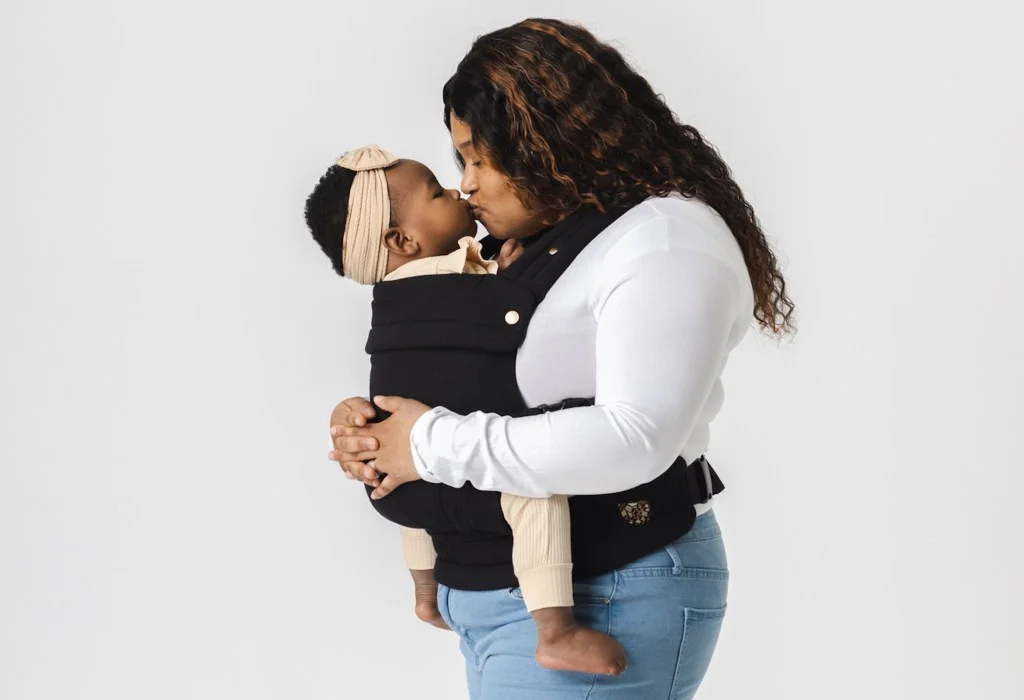
Allie built the brand’s presence before launch, with help from friends who made the website and took the first product photos. She also grew an Instagram account and an email list. Her marketing spoke to mothers as people with their own goals, rather than focusing only on product specifications. “I’m talking to the mom,” she says, describing content that shows what a parent might do while wearing the carrier.
That approach found an audience. At the time of the interview, Mabē had 176,000 Instagram followers, and the founders credited social media and word of mouth with generating early demand. The company says its first launch sold out in two hours. For a later launch, repeated customer requests led the founders to offer preorders.
Thousands of people were waiting on the website when the preorder opened. “Orders started to roll in, and we sold out,” Hunter recalls. Mabē sold thousands of carriers in under a minute, bringing in about $500,000 in revenue. The founders put that money back into production, easing cash flow pressure without outside funding.
The business has since grown to eight figures in less than three years, placed products in 1,700 Target stores and, according to the company, was on pace to increase revenue by more than 40% year over year in 2026. Those figures point to momentum; the preorder itself is a sharper illustration of how an audience can turn launch demand into working capital.
Choosing quality over a cheaper fix
Growth also brought a costly test. During its first Black Friday sale, in 2024, Mabē found that a fabric batch didn’t meet the texture and feel it wanted. The founders said the issue wasn’t about safety, but the material fell short of their standards.
Rather than wait for complaints and replace only the carriers customers flagged, the company contacted affected buyers and sent replacements at no charge. It replaced a few thousand products, which the founders estimate cost about $250,000. That was a substantial expense after a major sales period, but the Taylors treated customer trust as part of the business they were building. Allie says the priority was making sure customers received the experience they deserved.
Becoming first-time parents in 2022 gave the childhood sweethearts a new perspective on a familiar product category: they saw a clear gap in the baby-carrier market. Their experience as parents appears to have shaped the business idea, though the fragment doesn’t say what specific need existing carriers failed to meet.
Read more about their transition to parenthood in this Entrepreneur article.

Sherin Shibu • News Reporter
Entrepreneur Staff
Sherin Shibu is a business news reporter at Entrepreneur.com. She previously worked for PCMag, Business... Read more