Trubar’s Growth From Local Retail Counters to a $173 Million Acquisition
Erica Groussman’s Trubar started with a tray of protein bars on local shop counters. It grew into a brand sold in 32,000 U.S. retail locations, generated about $100 million in 2025, and was acquired for $173 million earlier this year. Groussman stayed on as CEO.
The company’s early test was almost disarmingly simple: Groussman put bars beside cash registers and waited to see whether customers would buy them. They did. Shops reordered. That small signal became the start of a much larger retail business.
Trubar’s scale is striking, but the route there wasn’t a straight climb. It included a costly management mistake, expansion into major retailers, and a period inside a publicly traded company. Groussman says the business has shipped nearly 46 million protein bars in 2026. She credits hard work and getting the product into as many hands as possible. That’s a useful account of persistence; it doesn’t, by itself, explain how the company managed its financial and operational risks along the way.
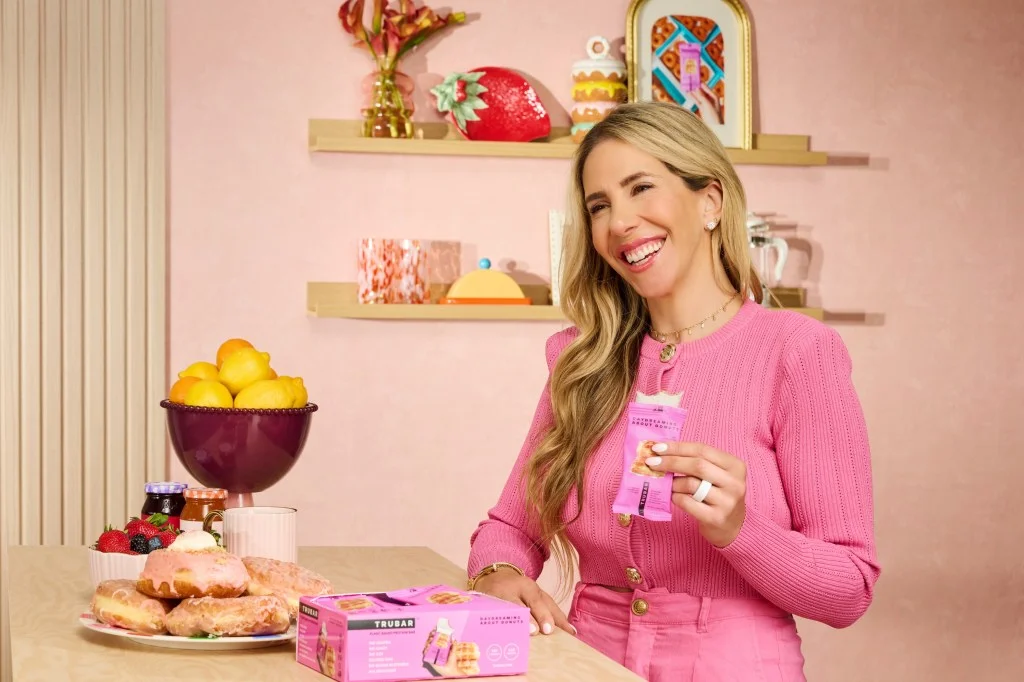
“I think that one of the biggest secrets is working your butt off,” Groussman says. “Really getting it into every hand that you can possibly get it into.”
The idea began with a bad aftertaste
Groussman wasn’t a food industry veteran. As a child, she had a newspaper route her mother arranged for her. She later studied communications at UCLA and worked in film finance and real estate. By the time Trubar took shape, she was a stay-at-home mother raising two children.
The idea came on a family trip to Disney. She had packed a protein bar from an established brand. It tasted good, but afterward she felt bloated and uncomfortable. “I remember just feeling very ucky,” she says. “My belly was very distended and uncomfortable. That was my epiphany. There has to be a better way.”
For Groussman, the product challenge was twofold: make a bar that tasted like dessert and avoid the uncomfortable feeling she associated with existing options. She worked with a food scientist, drawing on research, conversations and her personal network to find a collaborator. Product development remained hands-on and iterative, guided by taste, texture and what lingered after each bite.
“We’ll taste the bar, and I’ll say what I taste,” she says. “What am I getting afterwards? What’s the aftertaste? What do I want to see more of? Do I want more crunchy?”
First came the counters, then the stores
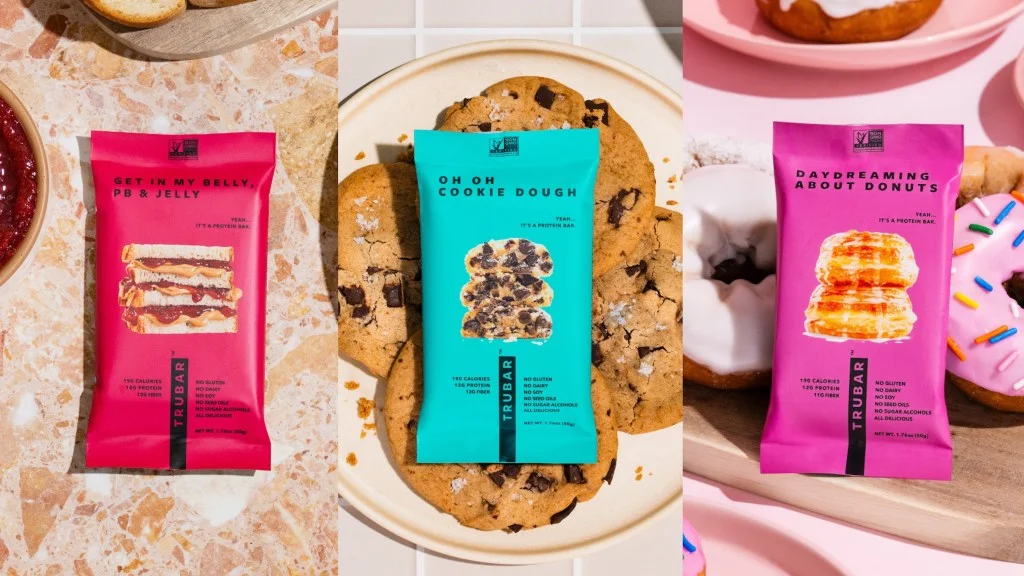
Groussman raised money from family and friends and worked with a food scientist and co-manufacturer to bring the bars to market. Trubar launched in 2018, with Groussman as CEO. Early flavors included Daydreaming About Donuts, Oh Oh Cookie Dough, Saltylicious Almond Love and Smother Fudger Peanut Butter. Cookie dough was an early bestseller.
Her first sales effort was direct and inexpensive: a wooden tray from Bed Bath & Beyond, a few protein bars and a simple pitch to local businesses. Juice shops, delis, salons and independent stores put the bars on their counters. Groussman told shop owners to sell them; the stores set prices, typically $3 to $4 per bar, and reordered when stock moved.
That repeat order mattered more than a polite show of interest. It gave her evidence that customers would pay for the product. Later, she pursued larger accounts, including a Whole Foods trial in 30 locations around 2020 after repeatedly contacting someone on LinkedIn. Groussman says Trubar became the top-selling bar in those stores, alongside established brands such as RXBAR and Kind, despite having no marketing budget.
Costco took a different path. Trubar first entered the Canadian market with one truckload during the Covid-19 period, but sales struggled. Groussman attributes some of the difficulty to lower brand recognition and a possible price disadvantage for a U.S. brand. The U.S. rollout came later and performed much better. The contrast is a reminder that a product’s reception can depend on market familiarity and pricing, as well as the product itself.
Move before every answer is in
Erica Groussman’s operating rule is simple: solve first, then diagnose. She thinks founders can stall when they wait for every detail to line up, turning caution into a liability. Her advice is to start with what you know and work from there: “Just get 80%, just go.”
That bias toward action also shapes how she hires. Groussman says you interview for a résumé but hire for chemistry. In a fast moving, sometimes chaotic business, she wants people who make decisions, take initiative and can grow into responsibility. “If they come up with an idea, try it. What’s the harm?” she says. It’s a practical approach, though the fragment doesn’t say how she weighs experimentation against the cost of a bad call.
A new owner, with the founder still in charge
Earlier this year, Turkish snack company Eti Gida acquired Trubar for $173 million, according to Groussman. She remains CEO and runs day to day operations. Her team stayed intact, a condition she considered essential when assessing potential partners.
The sale reads as a transition, not a departure. Trubar launched Trubar Kids last year and recently introduced Trubar Pro; Groussman sees room to expand into other categories. “I’m not done. It’s my baby,” she says. What comes next will test whether the company can broaden its reach while keeping the founder led culture she wanted to protect.
That ambition grew from a modest retail experiment: a wooden tray from Bed Bath & Beyond, a few protein bars and a straightforward pitch to local businesses—put the bars by the checkout and see if customers buy them. They did, and stores reordered.
That became Trubar, the snack company Groussman built into a business stocked in 32,000 U.S. retail locations. Its path included early retail wins, a period under a public company’s umbrella and, ultimately, the $173 million acquisition. Trubar grossed about $100 million in 2025 and shipped nearly 46 million protein bars in 2026, according to the fragment. The acquisition gives the business a new owner; Groussman’s continued leadership suggests she intends to shape what the next phase looks like.
Her starting point, she has said, was a family trip to Disney, where the available snacks left her feeling “ucky” and “uncomfortable.” She began selling bars at the checkout counters of local stores. A small test became a national retail business, and she remains at its helm after the sale.