BYDFi Review: Spot Simplicity and Derivatives Depth on One Platform
Most exchanges force a choice between simplicity for newcomers and depth for professionals. BYDFi tries to host both under one account, and the real question is whether each product stays readable to the person using it.
Where a first purchase starts
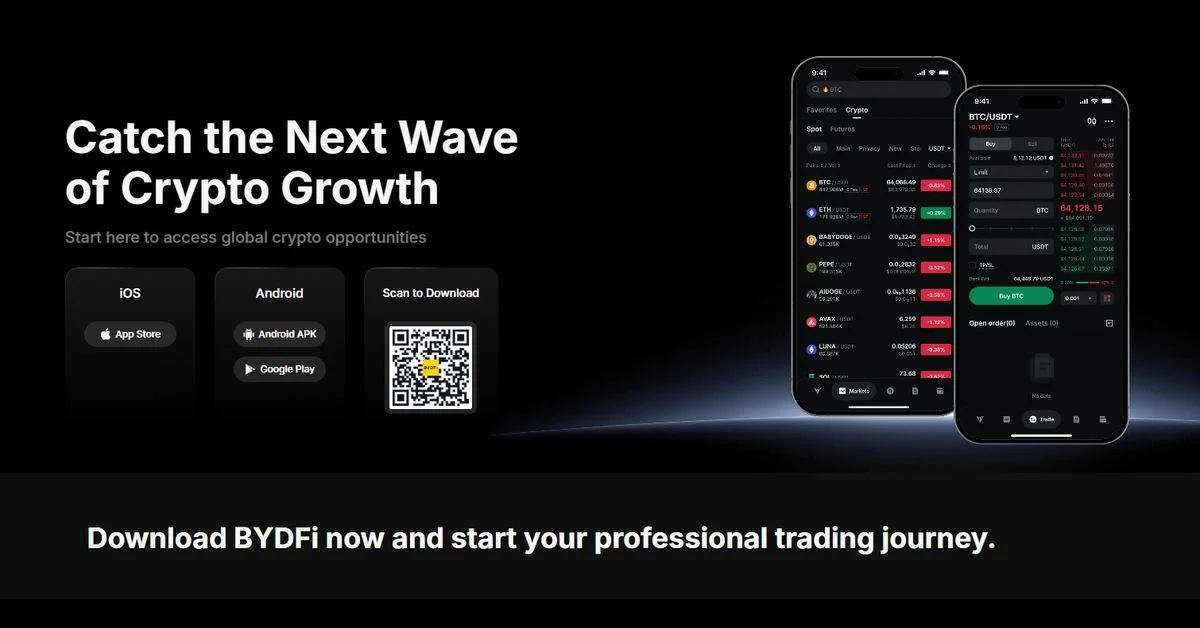
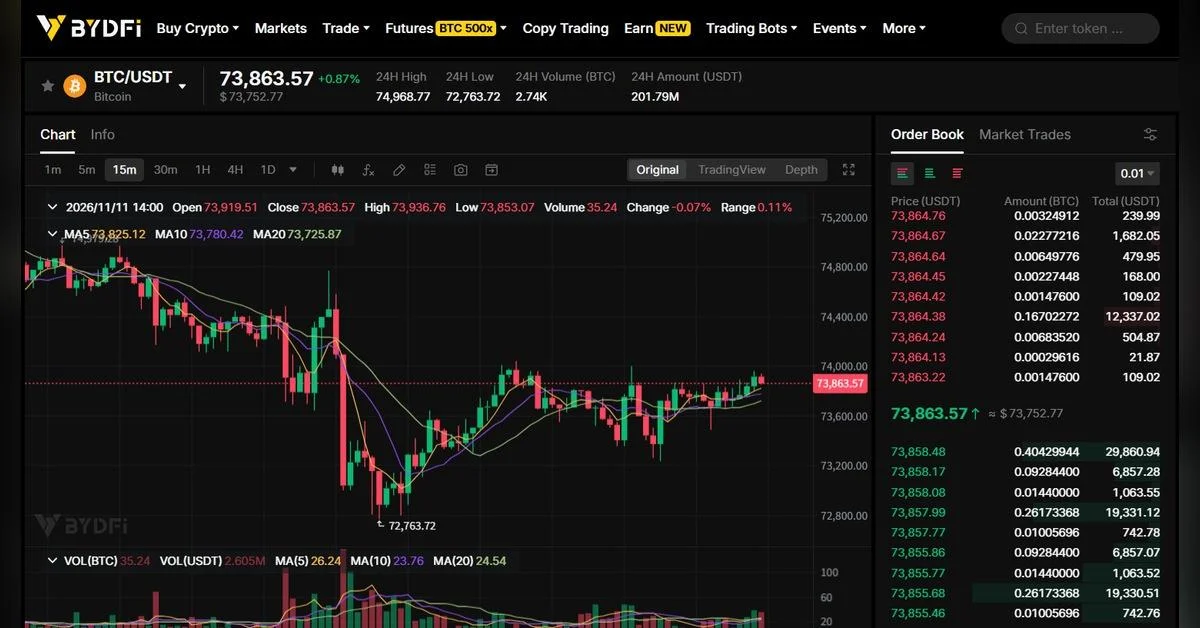
Spot trading is the obvious entry point. The interface places a price chart, order book and trade history on one screen. Buy BTC with USDT and the Bitcoin lands in the spot account, after which its value simply tracks the market. Nothing exotic there.
The order type decides how much control you keep. A market order fills immediately against whatever liquidity sits on the book, so your final average price depends on that depth. A limit order caps the price you'll pay on a buy or sets the floor on a sale, but it may fill only partly or not at all. Here's the thing: beginners often read "market" as "the price I see." It's really "the price the book gives me."
Then there's Convert, which skips the order book entirely. You review the exchange rate and the amount you'll receive before confirming. The fee guide says costs are built into the quote, with no separate Convert fee. My read is that the missing fee line tells you little on its own. Compare the final amount received against what a spot order would have delivered, and the true cost becomes visible.
Getting money in and out
Funding comes first. BYDFi lets users buy crypto with fiat through third-party payment providers. Payment methods, currencies and assets vary by location and provider, so your options depend on where you are. Check the final quote, the provider's charges and the crypto amount you'll actually receive before you confirm.
Moving crypto in from another wallet or exchange, or sending it out to an external address, depends on network compatibility. Pick the wrong network or mistype an address and the funds can be lost. Withdrawal fees and minimums also differ by asset and network. Verify them before any transfer, because they're part of what using the platform really costs.
Fees: where the numbers get real
BYDFi's published fee guide, checked in November 2026, lists spot trading at 0.1% for both maker and taker. USDT-M and COIN-M perpetual contracts charge 0.02% as maker and 0.06% as taker. VIP discounts may apply, and rates can change, so treat the table as a starting point.
Product | Maker fee | Taker fee |
Spot trading | 0.1% | 0.1% |
USDT-M and COIN-M perpetual contracts | 0.02% | 0.06% |
Maker orders rest on the book and add liquidity. Taker orders take liquidity that already exists. A limit order that matches immediately is charged as a taker, so choosing a limit order doesn't guarantee the lower maker rate.
Run the numbers on a spot purchase first. A hypothetical 1,000 USDT buy at 0.1% costs 1 USDT in fees. Any later sale carries its own fee, calculated on the sale's value. Because spot maker and taker rates are identical, order type matters for execution and price control rather than the fee line.
Futures change the arithmetic. A 10,000 USDT position opened at the 0.06% taker rate costs 6 USDT. Close it at the same notional value and rate, and another 6 USDT goes out, for 12 USDT of execution cost before funding and slippage. Position value, not the margin you committed, drives the fee. That's the detail that catches people off guard. A displayed gain can look different from the result after closing once fees, funding and execution price are netted out.
Perpetuals, settlement and order controls
USDT-M perpetuals are quoted and settled in USDT and carry no expiry date. They allow long and short exposure, but margin requirements and liquidation make them far less forgiving than a fully funded spot purchase.
COIN-M perpetuals add a twist. Profit and loss settle in the underlying cryptocurrency rather than USDT. On a BTCUSD COIN-M position, that P&L is calculated in BTC, and the value of those BTC holdings moves with the market too. Traders need to track both the contract's settlement rules and their exposure to the underlying asset.
The futures interface offers limit, market and trigger orders, plus isolated and cross margin. Isolated margin ties collateral to a single position. Cross margin pools eligible funds across positions. That choice determines how much of your balance can absorb losses. A triggered market order may fill away from its trigger price, and a triggered limit order may never fill. Order book depth and position size still matter.
Automation for different plans
Spot DCA schedules recurring purchases at chosen intervals and amounts, with an optional buying-price range. It takes repetitive manual buying off your plate. Each round still needs funds, and repeated purchases accumulate an asset that can fall in value over time.
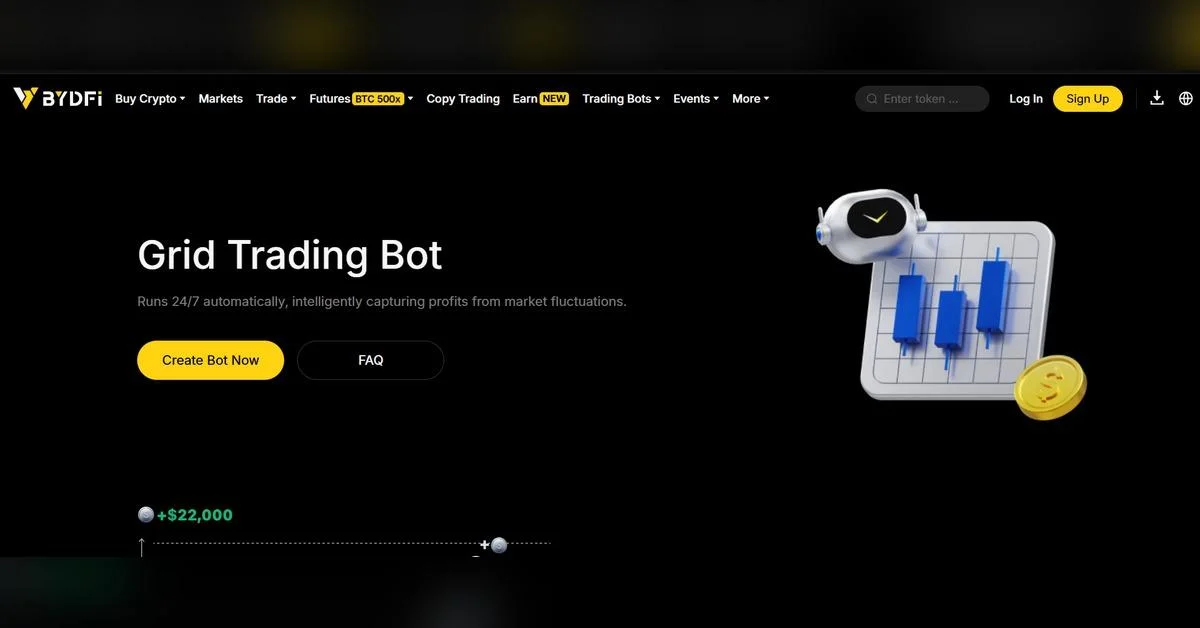
Spot Grid places orders across a price range you configure, aiming to capture repeated swings inside that band. You set the range, the grid spacing and the capital allocation. Completed grid trades can be profitable while the remaining holdings lose value, so the net result can still come out negative.
Futures Grid applies the same logic to derivatives, adding margin and funding considerations. Copy Trading lets you follow a selected lead trader's activity under separate profit-sharing terms. BYDFi's guide lists a default profit-share ratio of 10%, which traders can apply to adjust. Check the chosen trader's ratio and the settlement rules alongside trading fees and the strategy's exposure. Following someone means inheriting their decisions.
Account security and what it doesn't cover
The documentation describes passkeys for login and withdrawal authorization through supported device authentication. These are sensible access controls. They say nothing about the exchange's financial condition, and they don't guarantee withdrawals during operational problems.
Assets held on a custodial exchange carry counterparty risk regardless of how secure the login is. A document review can cover stated controls, but execution quality, withdrawal handling and support responsiveness need separate evidence. Product access also varies by location, so confirm eligibility for the service you want before funding an account.
Who this suits
The main advantage is range. New buyers get spot orders and quoted conversions, while active traders get derivatives and automation. Published fee rates make baseline costs easy to estimate, and the order types give real control over how an order meets the market.
The same range adds complexity. An occasional buyer has little use for funding rates or grid parameters. Active traders need to model funding, margin and repeated execution costs. Automated strategies need monitoring, and copy trading ties your results to someone else's choices.
My read is that BYDFi fits users who want that spread of products and are willing to learn the rules of whichever one they pick. Beginners should confirm the purchase flow makes the price, fees and resulting balance clear before committing. Experienced traders should test execution and costs against their usual position sizes and holding periods, because that's where the platform's fee structure will either work for them or quietly erode their returns.