Selling a Business in 2027: Why Buyer Fit Now Outweighs Listing Reach
Think about how much of a listing platform's job used to be showing up. Get the business in front of enough eyes and the rest was the broker's problem. That model is starting to crack, and the platforms that are gaining ground are the ones willing to handle the messy work that comes after a buyer says yes.
Where the Old Model Stops
The oldest names in this space go back a long way. BizQuest launched in 1994, and BizBuySell and BusinessesForSale.com followed in 1996. They were built to do one thing well: move business-for-sale classifieds online so owners and brokers could reach buyers outside their home market.
They still do that. Owners and brokers can pay for more visibility, and buyers can filter by industry, location, and price. But the hard parts haven't moved. Pricing the business, getting the financials in shape, screening inquiries, and running negotiations and due diligence still fall almost entirely on the seller.
Platforms Are Taking On More of the Work
Newer platforms are picking up that slack. Exposure is the starting point now, not the product. Owners need help establishing value, preparing financials, evaluating offers, and getting through diligence without losing momentum.
Financing is where this gets tighter. Small Business Administration (SBA) loans remain a major capital source for small business acquisitions, but recent changes to the program's underwriting requirements have raised the stakes on financial preparation.

SBA lenders scrutinize a business's financial performance before they approve a loan. That shifts the weight onto what sellers do before they ever go to market: organizing records, documenting add-backs, and making sure reported earnings survive a hard look. A platform that helps owners build those materials can make the financing step far less painful when a serious buyer shows up.
A Broader Set of Buyers
The buyer pool is changing too. Private equity (PE) firms and independent sponsors are showing up more often in smaller deals, alongside individual entrepreneurs, search funds, and existing owners looking to grow.
These buyers don't operate the same way. Their investment criteria, financing sources, diligence processes, and expectations of the seller all differ. According to Baton's Small Business Buyer Intelligence Report: Q1 2026, investor equity from PE firms and search funds is now the largest financing source on the platform, backing 27.5 percent of deals.
Finding a buyer is only the first step. Owners also need to know who's serious and who can actually fund the deal.
"Every seller has a different idea of a good outcome," said Chat Joglekar, co-founder and CEO of Baton. "For one owner, it's protecting the people who built the business. For another, it's staying on part-time after the sale. Our job is to find buyers who fit that picture."
What to Weigh Before Choosing
Here's the thing: a platform's value now depends less on how many people see a listing and more on what happens next. Sellers should ask whether a platform can help them with the following:
Reach the right buyers. The goal is putting the business in front of people whose criteria, experience, and financing capacity match the opportunity. The same Baton report found that 59 percent of buyers on the platform are open to buying a business in another state. A search limited to local networks can miss most of the market.
Separate serious interest from casual inquiries. Owners have limited time, and they shouldn't spend it on conversations that were never going anywhere. Rejigg vets buyers on acquisition experience, financing plans, and fit with the business.
Prepare for scrutiny. Buyers and lenders need financial information they can trust. SMB.co connects sellers with financial and legal experts to prepare for a sale. Baton offers hands-on financial reconciliation, including reviewing add-backs and normalizing earnings so buyers can judge performance more accurately.
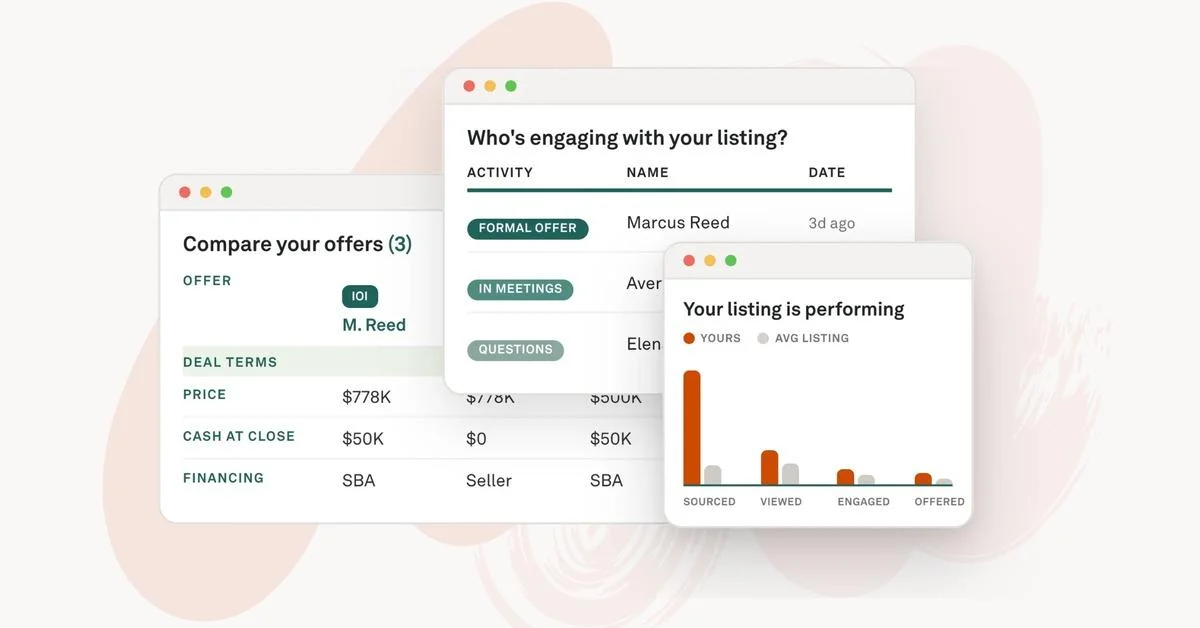
Stay informed. Track buyer engagement, know where negotiations stand, and see what needs attention next. Dealonomy, Baton, and Axial all pair sellers with advisors who guide them through offers and the transaction.
Control the cost of selling. Compare listing fees, commissions, success fees, and advisory costs against what's actually included. Baton charges a 6 percent success fee, compared with the 10–15 percent commissions commonly charged by traditional business brokers.
Where Owners Should List in 2027
Broad marketplaces still deliver exposure, and for many owners that's a fine place to start. But the platforms pulling ahead can also verify financials, connect sellers with buyers who fit, and carry the deal through closing. My read is that owners who compare platforms on those terms, and on what each one costs, are the ones most likely to land a buyer who values the business the way they do.